







Most people still love a good old-fashioned shopping trip – but they have very high expectations of the stores and restaurants they visit.
Shoppers want to avoid wasting time searching for items on shelves or waiting in long checkout lines. Diners want short wait times and easy payment options. And all consumers want access to straightforward, trustworthy information about their products.
Fortunately, the right digital technology makes it easy to meet all of these expectations.
Let’s look at some of the best new solutions that can help your business deliver a better customer experience and build lasting long-term relationships.
Digital signage
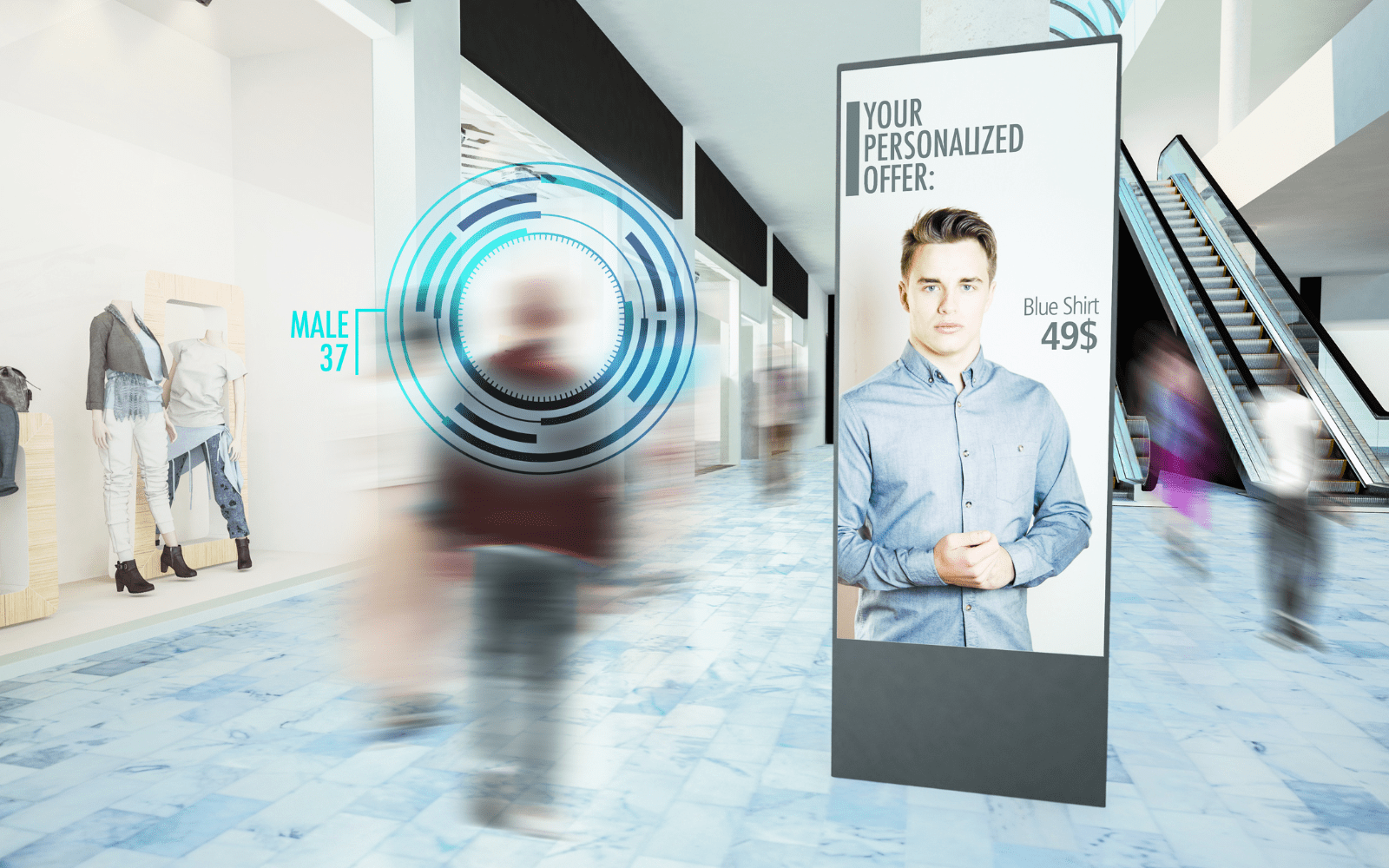
In the old days, store owners hung simple signs to advertise specials, let customers know about new products, and so on. But as the production cycle speeds up, retailers are discovering that old-fashioned signs cannot keep up.
Digital signage makes it easy to update prices, product availability, and other key information. Retailers can change multiple displays, even in multiple locations, with the touch of a button. They can also create different displays for each retail outlet, or introduce different signage in each aisle of a large store.
Today’s consumers are constantly taking in information from a great variety of sources. They’re seeing ads on their smartphones and getting news about new products on various social media platforms.
Unfortunately, this means that consumers have started to “tune out” a lot of messages. So what’s the best way to recapture their attention?
Studies have shown that dynamic, multimedia digital signs attract people’s eyes in a way that static signs cannot. Digital signage can hold consumers’ attention and get your message across – even to the most distracted modern customer.
Self-service kiosks
Most customers are already prepared to make a purchase when they enter a store. But that buyer intent can fade if customers don’t find what they’re looking for – and no retailer can afford to keep every single item in their catalogue in stock all the time.
That’s where the self-service kiosk comes in. Self-service kiosks create an “endless aisle,” where customers can shop a retailer’s entire catalogue virtually. It’s a great way to combine the in-store experience with the convenience of online shopping.
Mobile point-of-sale solutions
A mobile point-of-sale solution makes it easier for customers to check out quickly when they make purchases, without waiting in long lines. Unlike the conventional stationary point of sale, the mobile point of sale is portable; the technology uses either a smartphone or a tablet to accept payment.
Restaurants are already using mobile POS solutions to take payments right in the drive-through line, which means a faster checkout process for everyone in the line. Stores use mobile POS to take payments on the floor, which means that customers can finalise their purchases quickly.
This can also go a long way toward overcoming the lastminute hesitation that can come up when customers need to wait in a long line just to get to the cashier.
A mobile POS can’t accept cash payments. But it can do almost anything else that a conventional POS does, including keeping records of sales and customer data, so that retailers can build a stronger understanding of their consumers.
Mobile-supported curb side pickup
The COVID-19 pandemic accelerated the popularity of curb side pickup back in 2020, and the trend shows no sign of slowing down today.
Curb side pickup allows customers to shop from the comfort of their own homes, pick out exactly what they want, and complete their purchases in a quick and painless fashion.
The service provides the same benefits as online shopping but with the added benefit of near-instant satisfaction for customers. Instead of waiting at home for a delivery, customers can arrange pickups on their own schedules.
Other digital options
No two retail businesses are exactly the same. If you’re running a furniture store, you’ll probably want to consider augmented reality solutions that can help customers check whether new furniture “fits” in their homes. If you sell clothing, consider building a smart dressing room so that shoppers can see how an outfit would look in different lighting, or against a different backdrop.
Retailers may also want to build traffic heat maps, which track which areas of a store get the most foot traffic. It’s a great way to see which items are sparking customer interest.
The bottom line is that digital solutions work best when they are woven into the fabric of a retail establishment. Technology can never replace the warmth of a human sales associate; it also can’t replace the immersive experience of shopping in a real store.
But what modern technology can do is enhance the consumer experience at any retail store, making it smoother, easier, and more pleasant. And the experts at Zones can design a digital roadmap for you – putting you on the path to grow stronger, more lasting relationships with your customers.
Ready to accelerate your digital transformation? Then contact a Zones Account Manager on 020 7608 7676 or message us today to get started.